We hope you enjoy this excerpt from Barbara’s new book, Remember: A Four-Week Devotional for Eastertide. Says Barbara, “I wrote Remember because I wanted us to savor what Christ did on the Cross a bit more—to walk the roads He walked and learn from the moments He shared with His followers who were just like you and me.” We have limited quantities be sure to order yours today. We’re hoping the book will be your new favorite quiet time devotional.
“If our religion is something objective, then we must never avert our eyes from those elements in it which seem puzzling or repellent; for it will be precisely the puzzling or the repellent which conceals what we do not yet know and need to know.”
-C.S. Lewis

“Therefore, as you received Christ Jesus the Lord, so walk in him, rooted and built up in him and established in the faith ...”
-Colossians 2:6-7
For we who live in this prosperous era, suffering seems wrong, out of place. Comfort insulates us, keeping most suffering distant enough that we forget its inevitability, so that when hardship strikes, we feel caught off guard. The onslaught feels unfair.
But Jesus, fully God who knows all things, made clear to His followers that suffering is an inevitable consequence of ordinary living. “In the world you will have tribulation,” He said (John 16:33). As difficult as they are to hear, these words tell us the truth about ourselves and our world. And that truth is the world is broken, which leads to wicked weather and storms, sickness and disease, and short, difficult, and painful lives that always end in death.
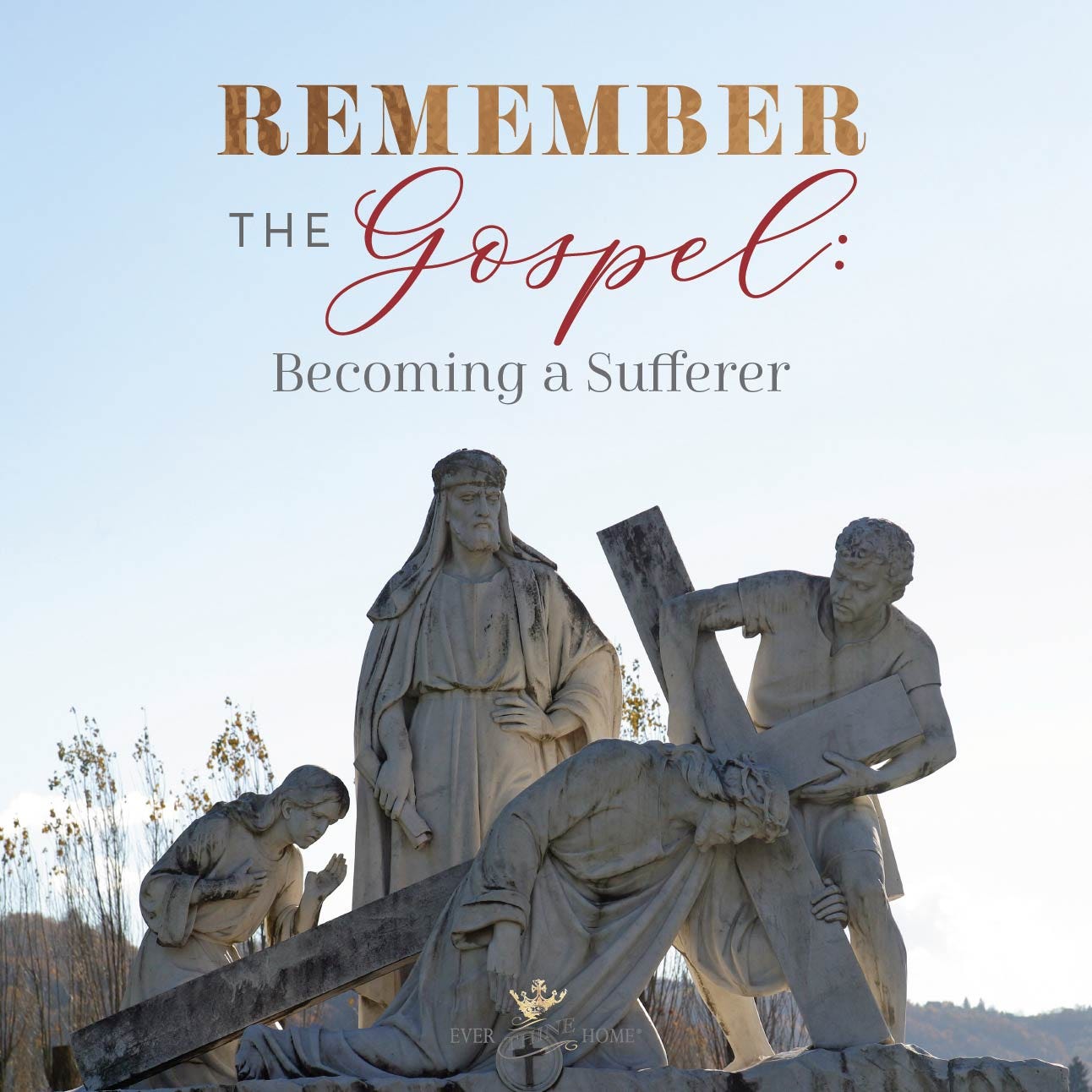
As Jesus called His disciples, He made it clear, repeating this challenge five times, “If anyone would come after me, let him deny himself and take up his cross daily and follow me” (Luke 9:23). The words “take up your cross” literally meant to carry an instrument of execution. Figuratively, the words meant that discipleship included carrying pain and suffering.
On the mountainside by the Sea of Galilee, Jesus spoke beautiful words to a huge crowd of eager listeners. Right from the start, He included nine beatitudes, or sayings of blessing. The last two blessings carried words of suffering: “Blessed are those who are persecuted for righteousness’ sake, for theirs is the kingdom of heaven,” and, “Blessed are you when others revile you and persecute you and utter all kinds of evil against you falsely on my account” (Matthew 5:10-11).
Hearing blessings like these raises eyebrows. It seems Jesus was saying being associated with Him, as God’s chosen leader for His offensive to reclaim people who are rightly His, can be dangerous. Ownership of every human heart remains contested and serious; it’s a battle with consequences. Suffering will result all around.
Surprisingly and hopefully, Jesus ended His last two blessings with happier words: “Rejoice and be glad …” (Matthew 5:12). But how can gladness and rejoicing be possible when suffering?

Three reasons come from Scripture. First, Jesus promised “… for your reward is great in heaven …” (Matthew 5:12). Second, we can rejoice toward God because we have hope for the future. Even if our bodies are wracked with pain, we know God sees, He aches with us, and He will one day end all pain and suffering.
And third, we can rejoice because Jesus endured worse for you and me. He did it by focusing on the joy set before Him. Jesus knowingly entered truly awful suffering because He saw past the present agony to a future of pure joy. His example gives us courage to persevere as He did for the same joy He received. Hebrews 12:1-2 tells us to run our race with endurance with Christ as our example: “who for the joy that was set before him endured the cross, despising the shame, and is seated at the right hand of the throne of God.”
Jesus taught us by His example that we, too, can survive hard times and suffering, because there is joy ahead for us also. Our path of discipleship mirrors our Master and our Friend’s. It is too easy to forget the reward of joy when we look only at the immediate experiences of suffering in this life.
An amazing story of gratitude and joy for an undeserved suffering comes from a woman named Fanny Crosby. As an infant, she became sick and her parents called for a doctor to come help. The medicine he prescribed tragically made her go blind.
For the rest of her long life, she endured endless difficulties from living without sight. But instead of becoming bitter, she chose to believe God meant good and He could bring good to her. During her lifetime, she wrote more than 8,000 hymns, including many well known today, such as “Blessed Assurance” and “To God Be the Glory.”
Famously, she said, “If I had a choice, I would choose to remain blind … for when I die the first face I will see will be that of my blessed Savior.”
These words of Fanny’s aren’t simply a good spin on her hardship. Her perspective grew from the truth of the Bible, which tells us plainly that when we get to heaven, we will see Him face to face. Jesus will welcome you face to face just as He did Fanny.
In my over fifty years of walking by faith with Jesus, I’ve encountered far more hardship, pain, loss, and suffering than I could have imagined when I was an eager new disciple in my twenties. The kindness of God didn’t tell me what the future held, and I’m grateful. He is a good Father who only tells His children what they need to hear when they need it.
But the suffering He allows we can confidently believe will result in good. Always. And His promises make all the difference in our suffering, for He promises to never leave or forsake us. He says that nothing will be able to separate us from Him. Jesus’s Resurrection guarantees these promises, because He became utterly forsaken, alone, friendless, and hopeless. He experienced unutterable agony on the Cross so that we might never be separated from God.
What promises! What a Savior!
He is risen indeed!
For Eastertide reflection:
1. I can confidently declare that all the hardships, injuries, sicknesses, relational distress and loss, and deaths of loved ones I’ve endured have been worth it. Why? Because I have learned amazing things from Jesus I wouldn’t have known otherwise. It’s one of the secrets of suffering—sufferers get closer to God and see Him more clearly. In your journal or the space below, write one or more lessons or truths you’ve learned about God from traveling through a hard season in your life.
2. Read Psalm 23. If you were asked to speak or write an article on the lessons you’ve learned from your valley of the shadow of death, what verse or several verses would you list as those that gave you the most comfort and peace?